ScreenSense Lab
An interactive dashboard that transforms social media usage data into meaningful insights about mental health and well-being for young adults.
View Live DemoProblem
Current screen time tools only show hours used without context on mental health impact.
Solution
An interactive dashboard combining visual analytics, user input, and an LLM chatbot for personalized insights.
Role
Researcher + Designer + Engineer
Tools
Python, Streamlit, Pandas, Matplotlib, OpenAI API, Git
Timeline
November – December 2025
Category
Data Visualization
Problem Motivation
Technology is everywhere in people's day-to-day lives. Social media usage has caused screen time to grow substantially, and it has become increasingly important to understand how this affects mental health and well-being.
Many users see that their online habits affect their mood, sleep, productivity, and self-esteem — but tools that exist today only provide screen time data without any context of the impacts. People need personalized insights, backed by data, to bridge the gap between mental health and their digital habits.
Goal
“Create an accessible, interactive application that helps users better understand the relationship between their social media activity and overall well-being.”
Research & Insights
Dataset
Used a Kaggle dataset on “Students' Social Media Addiction” featuring data from 705 students globally — ages 16–25 in high school, undergraduate, or graduate programs. Data was collected through surveys recruited via university mailing lists and social media platforms.
Key Insight: An excess amount of social media usage can negatively impact overall well-being, including stress, sleep, and other factors.
Metrics Analyzed
- •Average daily usage hours
- •Sleep hours per night
- •Mental health scores
- •Relationship conflicts over social media
Process & Methods
Sketches / Early Concepts
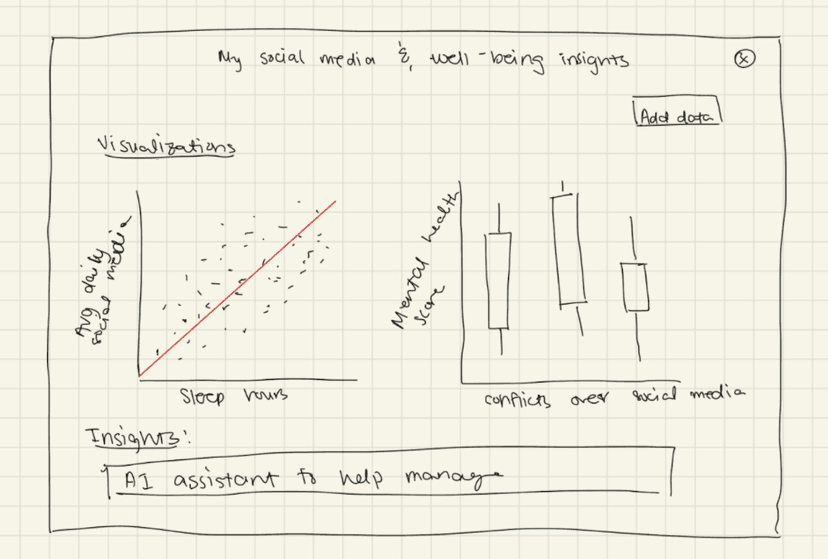
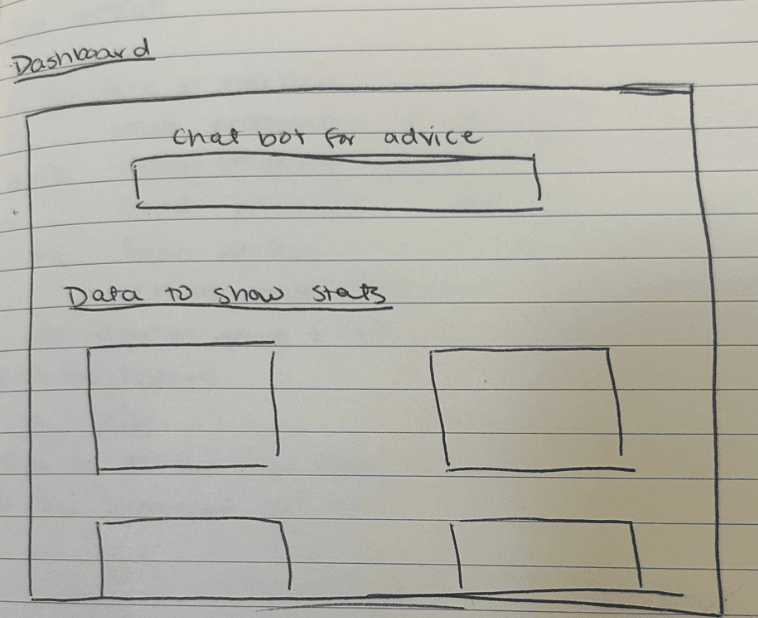
The initial sketch explored the first layout concept for the dashboard. After discussions with my professor and peers, I iterated on the design significantly. These sketches were very preliminary and the final dashboard changed substantially from these early concepts.
Prototyping & Iteration
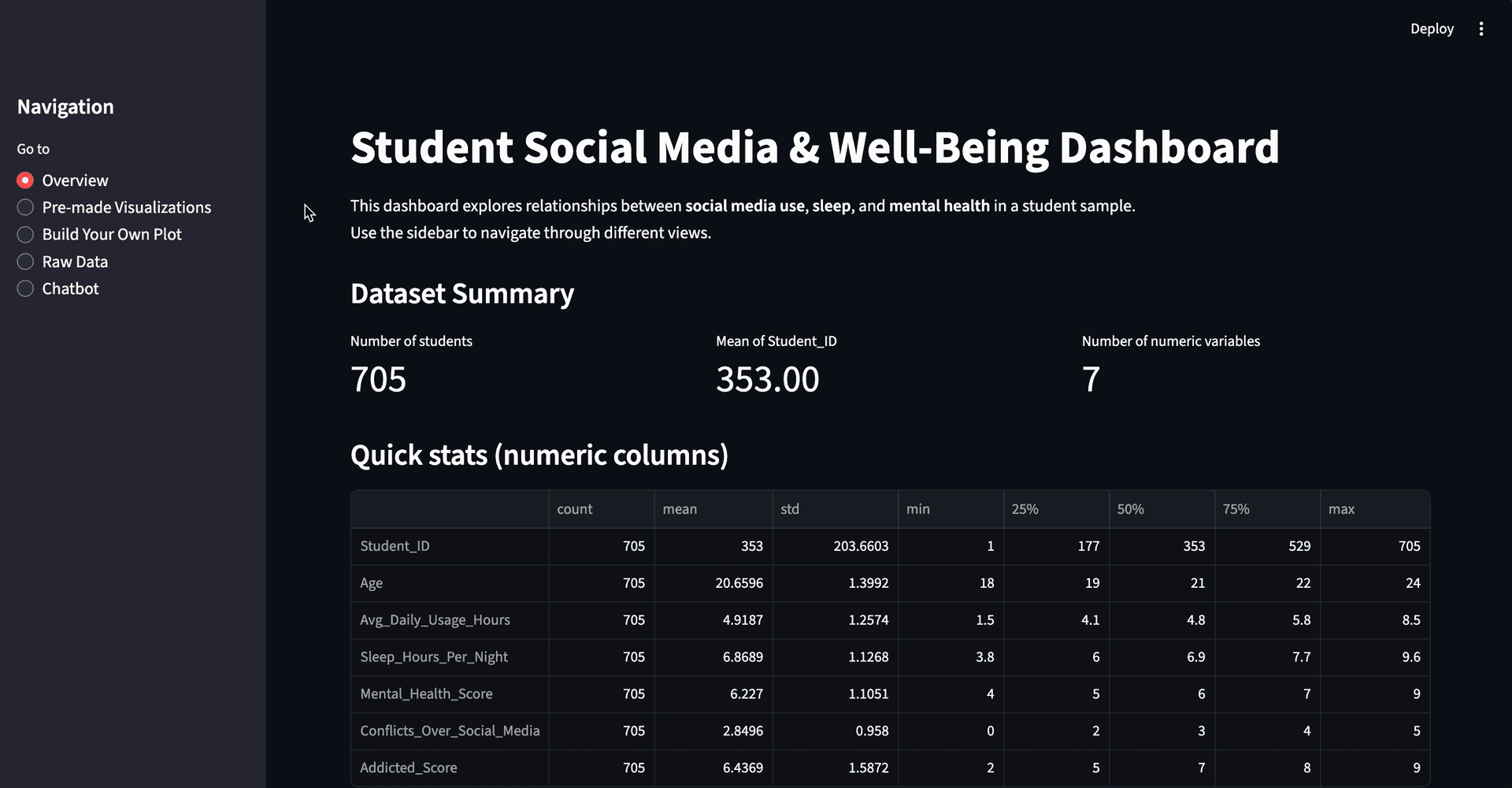
Initial Homepage
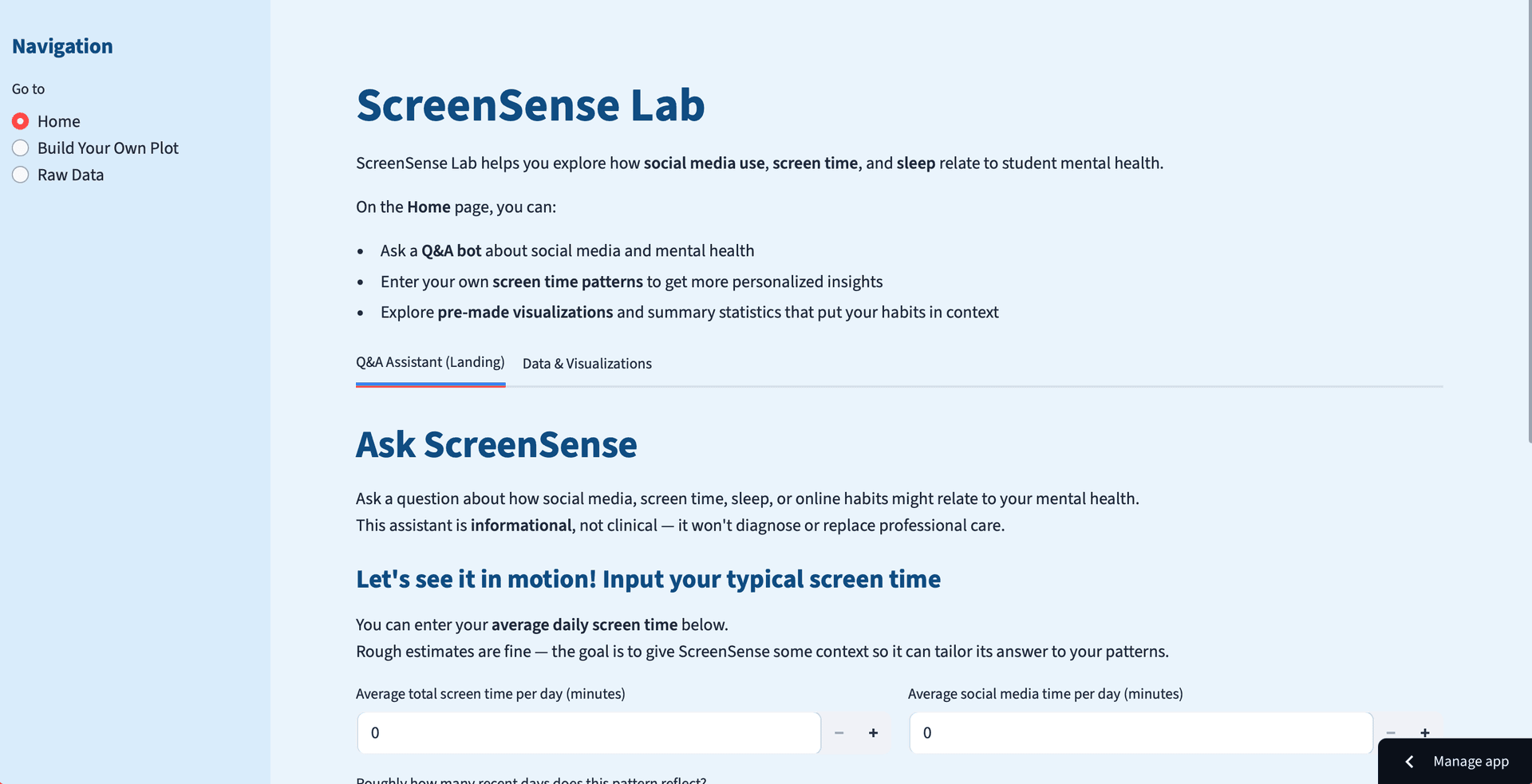
Final Homepage
Core Features
Manual Screen-Time Input
Users can input their own screen time data to receive personalized insights from the chatbot.
LLM Chatbot
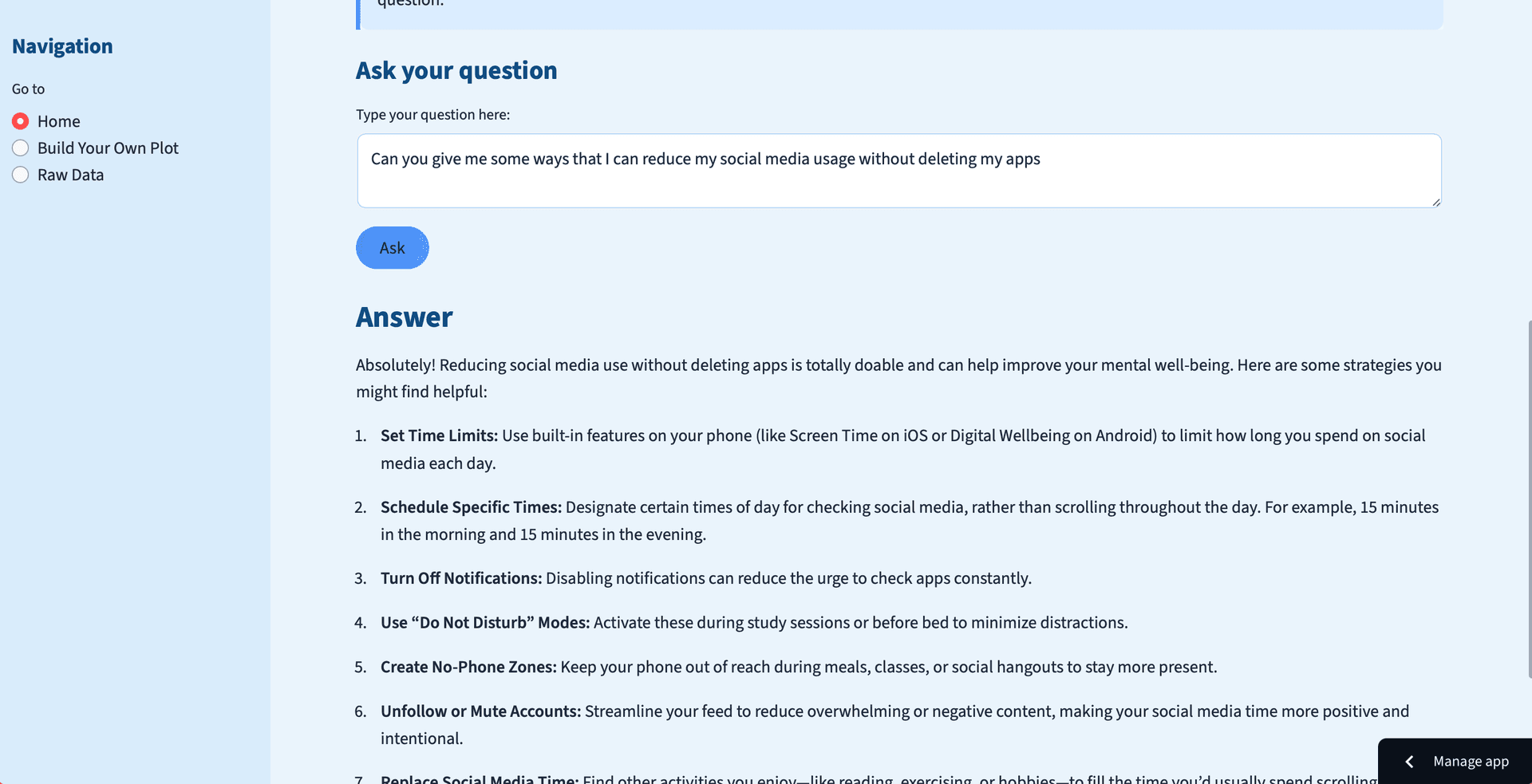
An AI-powered Q&A assistant that provides tailored conversational insights based on user data and the dataset.
Wellness Insights
Personalized recommendations and patterns helping users understand how their habits affect well-being.
Built-in Visualizations
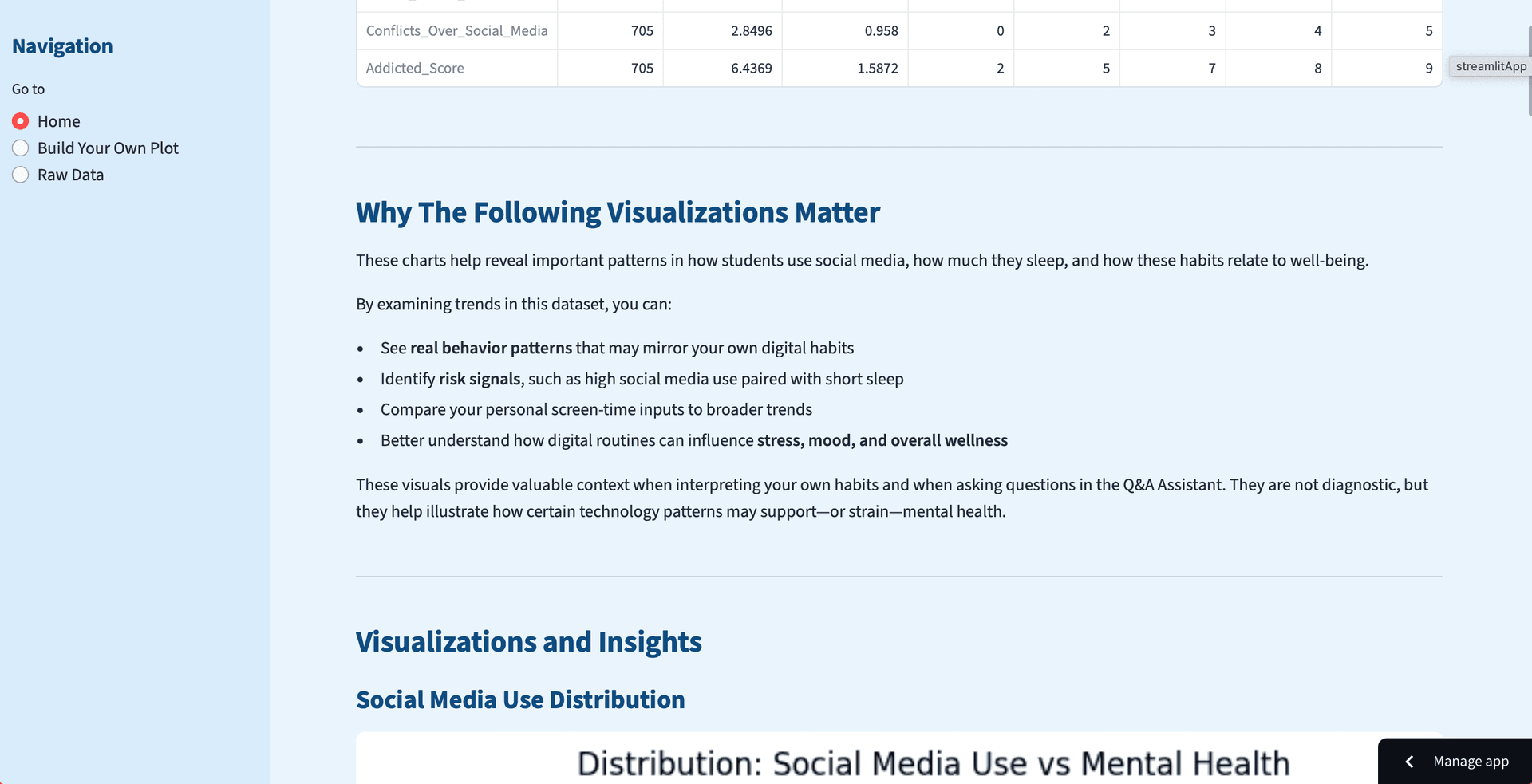
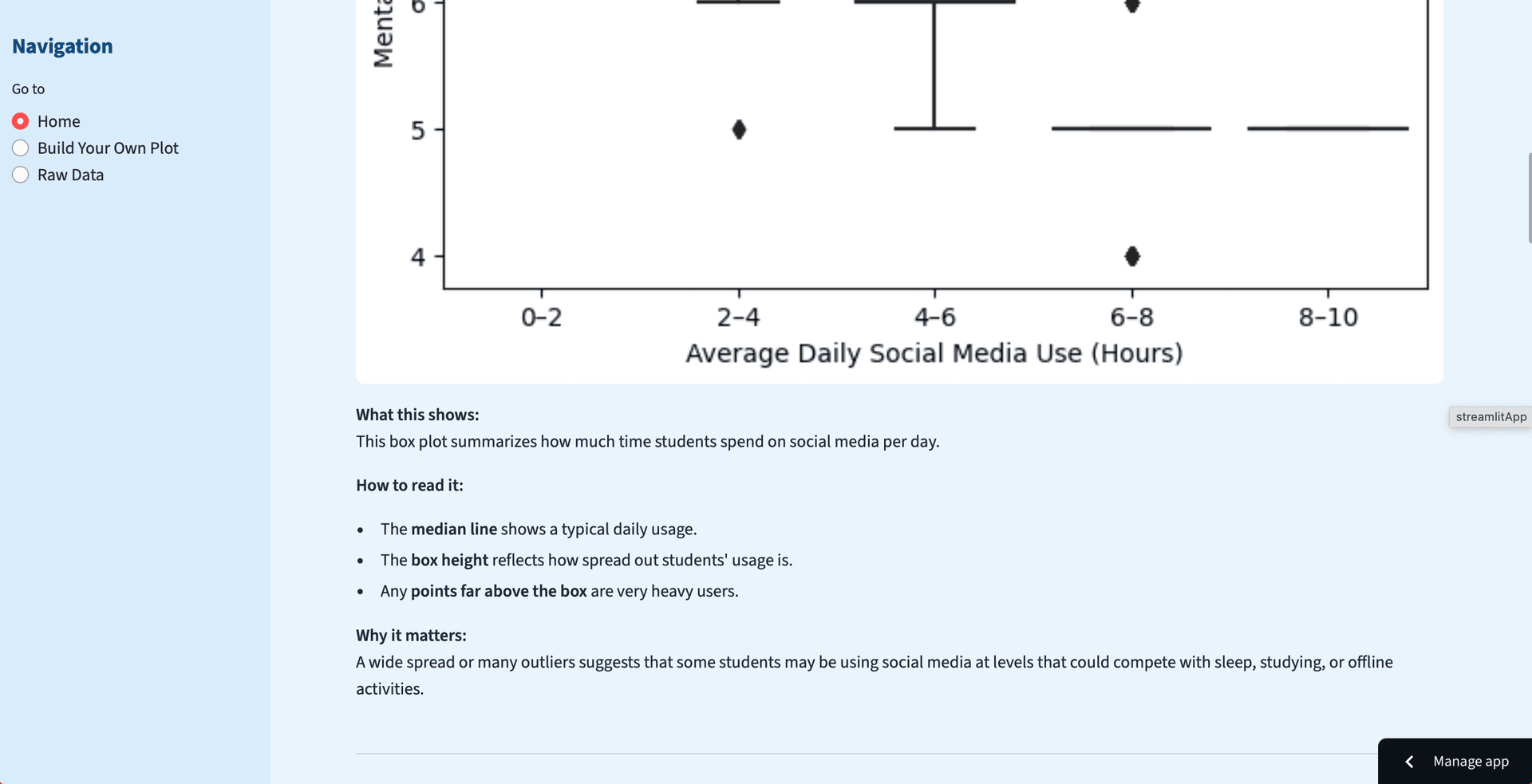
Pre-built charts with explanations to help users easily interpret the data and understand why it matters.
“Build Your Own Plot”
Users can explore additional aspects of the dataset by choosing which values they want to visualize in graph form.
Tech Stack
Streamlit frontend, Python/Pandas/Matplotlib backend, OpenAI API via LiteLLM for the chatbot.
Peer Feedback & Iteration
During final presentations, many peers noted that the visualizations on the home page were overwhelming or confusing to understand. This feedback became an opportunity to redesign the homepage layout.
The restructured homepage now has two clear sections: a “Q&A Assistant” and a “Data & Visualizations” section. Each visualization also includes supplementary comments explaining how to interpret them and why the data matters.
Key Iterations
- •Added manual user data input for personalized chatbot responses
- •Separated visualizations into their own dedicated section
- •Added explanations to each chart for easier interpretation
- •Changed to calming blue hue theme for a more visually appealing experience
Reflections
The final dashboard takes raw digital patterns and behaviors and turns them into meaningful insights that help users understand how their social media habits relate to their well-being. Through the combination of visual data, personalized input, and the LLM chatbot, the tool gives a supportive way for users to see and reflect on their habits and mental health.
By bridging the gap between mental health research and digital behavior, this dashboard shows how design and data-driven insights can help promote healthier online behaviors with mindful intentions.
Continue exploring
View All Projects →