AI Trust & Usage Research
Exploring young adults' trust in AI for financial decision-making.
Problem
Young adults lack trust and confidence in using AI for high-stakes financial decisions.
Solution
Qualitative research with 15 young adults uncovering the emotional landscape of AI-assisted decision-making.
Role
Researcher
Team
Alana S., Lauren P., Neil N., FCAT (Fidelity Center for Applied Technology)
Tools
Miro, Tetra/Respondent, Canva
Timeline
October 2025 – May 2026
Overview
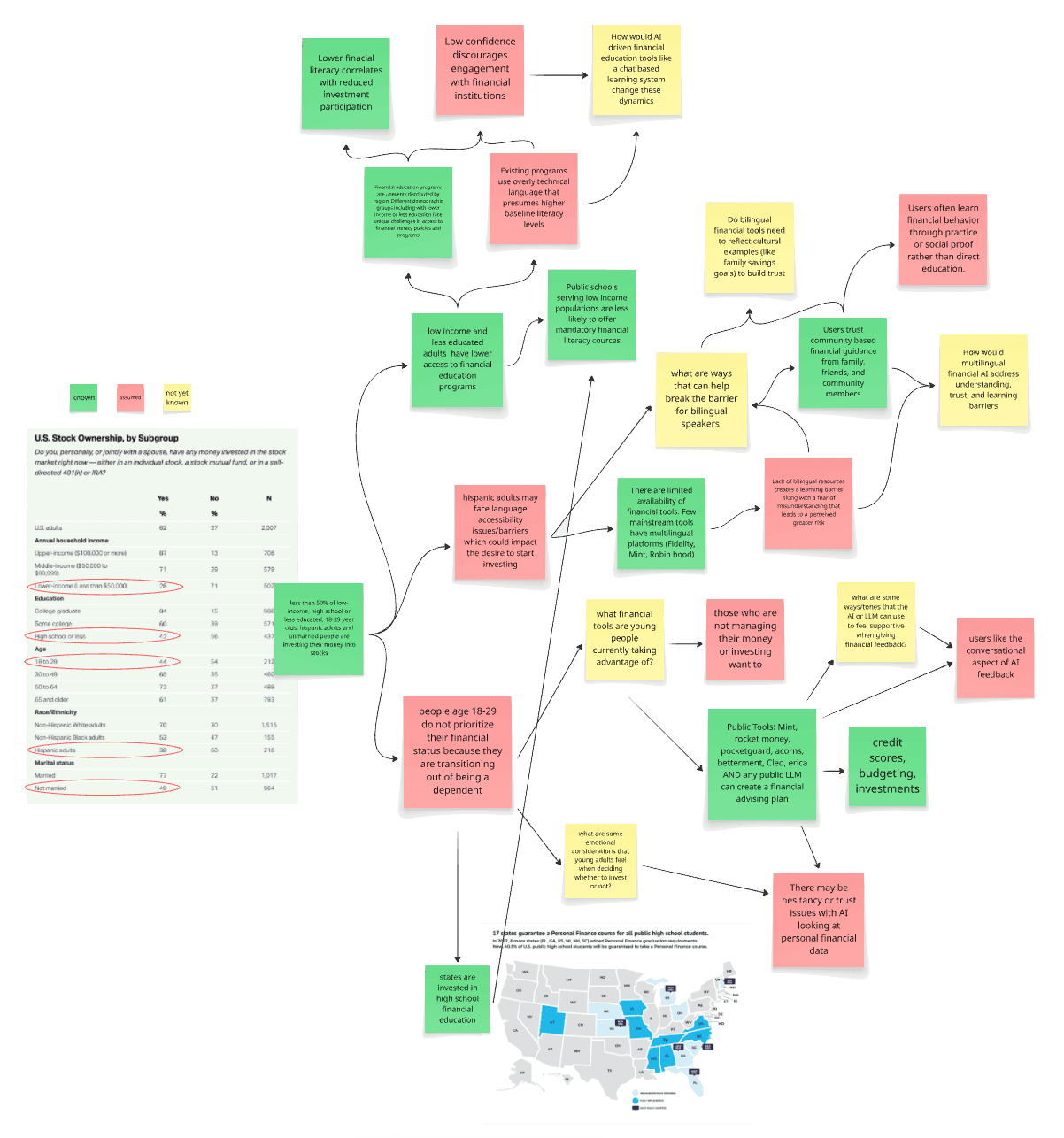
As a part of our DesignTK 520/521 classes (Design Innovation Studio), we partnered with the Fidelity Center for Applied Technology to explore AI trust and usage. AI adoption is rapidly evolving, yet trust levels vary significantly. We identified a specific gap: less than 50% of low-income, young (18-29), or Hispanic adults are currently investing in stocks. We hypothesized that the primary barriers to budgeting and investing are knowledge and confidence, rather than a lack of funds.
Initially, we aimed to understand how AI could bridge literacy gaps. However, we reframed our goal to explore the broader emotional landscape—how young adults feel about relying on AI for high-stakes decisions across school, work, and finances.
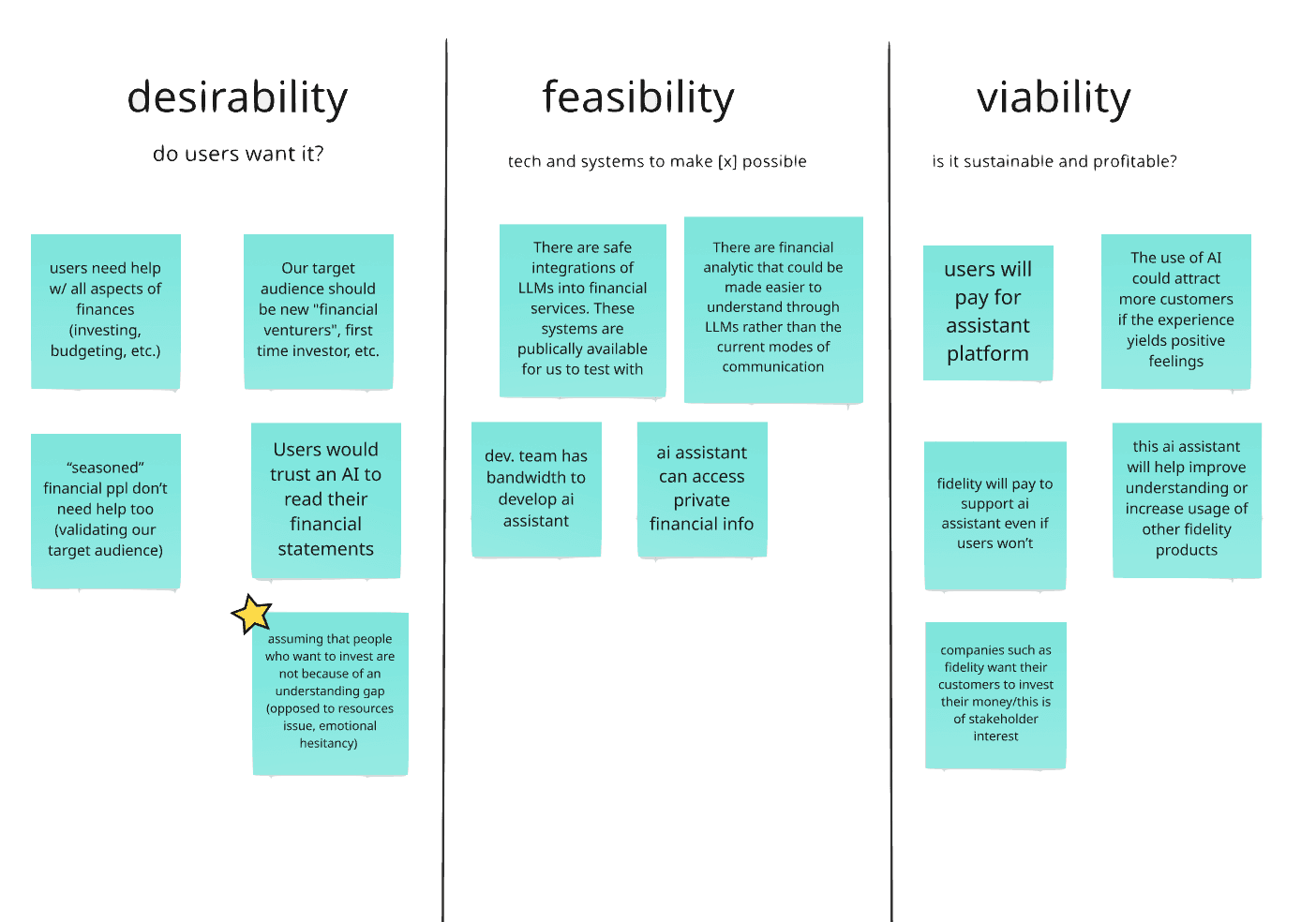
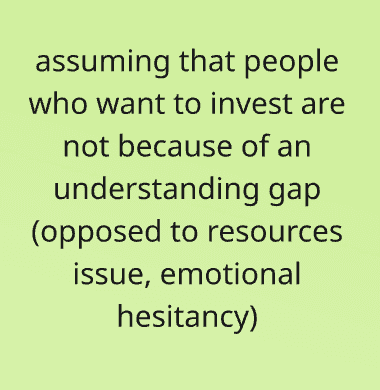
Research Methodology
Screening Questions
- •Age 18-29
- •U.S. Based
- •Familiarity with AI tools
- •General Attitude Toward AI
- •Comfort with AI influence
Participants
- •15 Total
- •Some interest in managing finances and using AI/fintech
Methodology
- •Tetra/Respondent Online Interviews
- •In-Person Interviews
- •Conducted 11/17-11/28 (Thanksgiving Break)
We conducted a mix of 15 in-person and online interviews via Tetra/Respondent with U.S.-based adults aged 18–29 with existing familiarity with AI tools. We used Miro to ideate and cluster research findings into actionable insights for our financial partner.
Insights
AI can advise, not decide
- •“Make the investment decision yourself, but use everything that ChatGPT can offer you to learn and inform that decision” - Tetra Interviewee #2
- •“I can always ask [AI for advice], but I just would not rely on it completely” - Interviewee “T”
Strong desire for accuracy
- •“I generally trust [AI], but if it’s a higher stakes thing then I definitely want to check the sources” - Tetra Interviewee #3
- •“AI hasn’t always been 100% accurate and it’s always worth looking at another source...I trust it but it’s not going to be the only thing I look at” - Tetra Interviewee #5
Initial Proposal
We proposed a three-tiered approach:
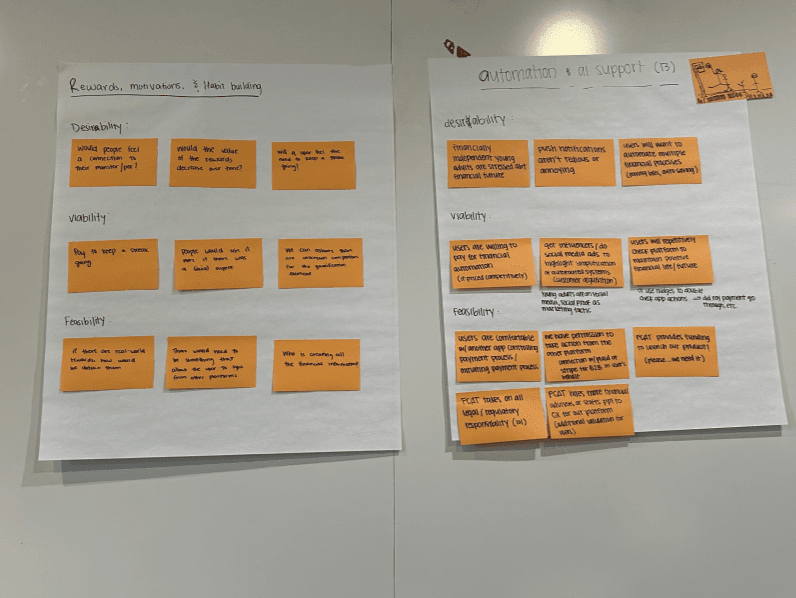
Ideation Session
Phase 1
Human-First BrandingPosition AI as a support system for human advisors, emphasizing empathy and reliability.
Phase 2
Backend DeploymentUse AI as a productivity booster for internal teams rather than a direct-to-customer interface.
Phase 3
Clarify & Learn FeatureAn AI feature that explains financial terms with full transparency, including citations and verified-by-expert badges.
Spring 2026
Pivot
FA '25 Focus
Young adults lack trust and confidence in using AI for high-stakes financial decisions.
SP '26 Focus
Understand how young adults with ADHD interact with finance and financial platforms to decrease stress around wealth management.
Meet Sam

Sam, 22
Sales Representative · Chicago, IL · Recently graduated
“I just want to stop feeling behind with my money — I know I’m spending too much, I just can’t seem to fix it.”
Background
Sam just finished college and landed his first real job as a sales rep in Chicago. For the first time he’s fully financially independent — paying his own rent, bills, and day-to-day expenses. It’s exciting, but the reality of managing money on his own has been harder than expected.
Pain Points
- Time blindness — bills arrive in the mail and he notices them, but forgets to act until it’s too late.
- Executive dysfunction — even knowing he should review finances feels like too much to start.
- Impulse spending — daily coffee runs and small purchases add up significantly by month’s end without him realizing it.
Goals
- Build better financial habits without feeling overwhelmed by the process.
- Make intentional spending decisions so money doesn’t quietly disappear.
- Feel a sense of control and confidence in his finances for the first time.
How might we help young adults with ADHD manage their finances in low-effort moments that reduce executive overload and time-blind avoidance?
This Semester: Interviews + Research
Notification Dread Cycle
Users with ADHD often avoid financial apps due to overwhelming or poorly-timed notifications, creating a cycle of avoidance and increased stress.
Gamification for Dopamine
Reward-driven mechanics align with how ADHD brains seek motivation, making habit formation more accessible and engaging.
Adaptive Timing > Persistent Reminders
Flexible, context-aware nudges are far more effective than fixed, high-frequency reminders for users with time-blindness.
Design Concepts
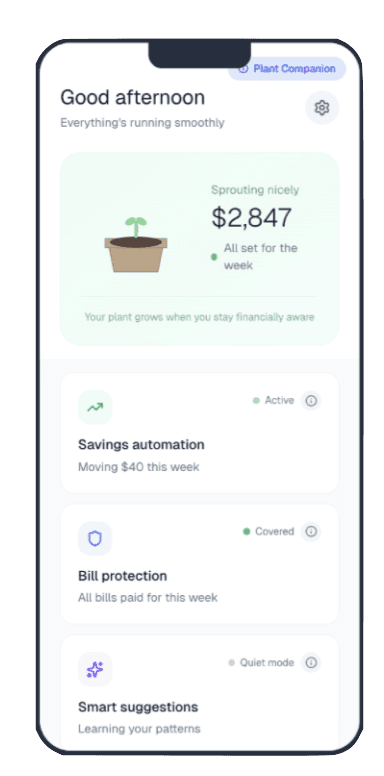
Context-Dependent Push Notifications
Using user-specific signals to surface financial nudges at exactly the right moment — not at a fixed time, but when the user is ready.
- Biometric signals (e.g. Oura)
- Location tracking
- Task completion (e.g. Google Calendar)
Visual Aesthetic
A plant-based metaphor makes financial health feel tangible and alive. Abstract concepts like savings and bill coverage become visible, emotional progress — something worth tending to.
Gamified Habit Building
Reward-driven mechanics create immediate feedback that aligns with how ADHD brains seek motivation — turning financial routines into something that feels good to maintain.
Prototype
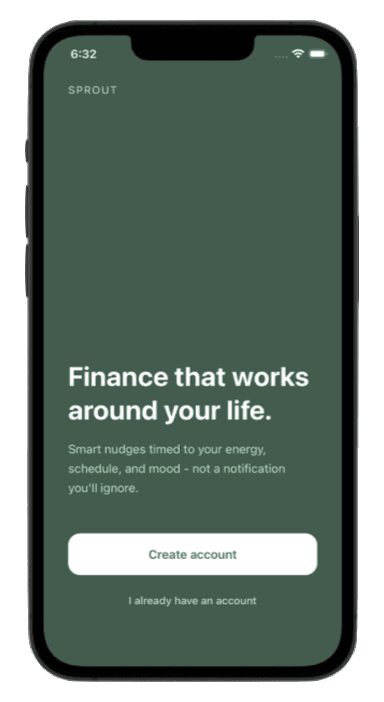
Streamlined onboarding
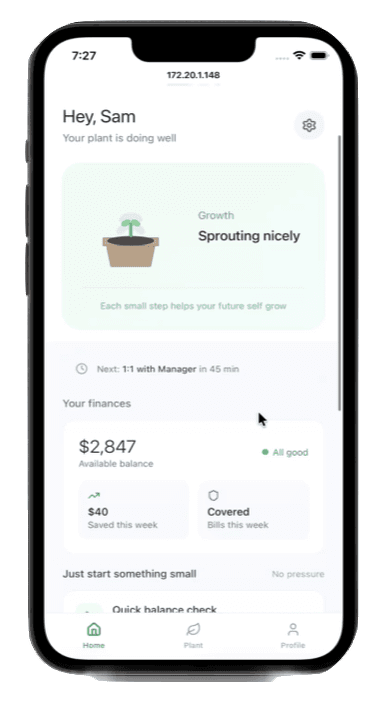
Home dashboard & plant view
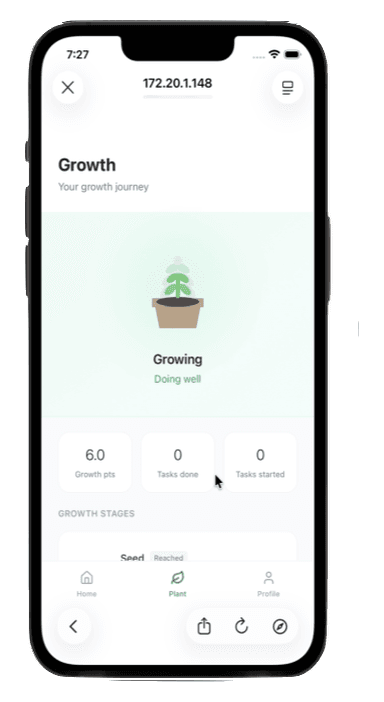
Plant growth journey
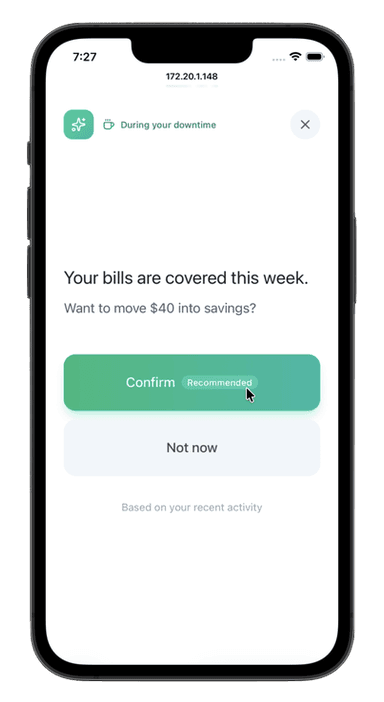
Context-aware notifications
Reflection
What We Learned
- •Subtle, timing-based prompts help users start tasks without adding cognitive pressure
- •Plant analogy makes progress feel visible and emotional
Next Steps
- •Move more toward personalized, predictive support using biometric or behavioral data
- •Conduct more user testing based on developed prototype
Continue exploring
View All Projects →